

 Big Easy Fence Company

What Are the Benefits of Installing a Cedar Privacy Fence?
Cedar privacy fences offer natural beauty, exceptional durability, and inherent resistance to rot...


Cedar privacy fence installation in New Orleans typically costs between $25-45 per linear foot and takes 2-5 days for an average-sized residential property. The process involves careful planning for the city’s unique soil conditions, humidity levels, and building codes, making professional installation recommended for long-lasting results in this challenging climate.
New Orleans homeowners face unique challenges when selecting and installing privacy fencing. The city’s high humidity, frequent rainfall, and expansive clay soils create conditions that can compromise inferior fencing materials within just a few years. Cedar stands out as an exceptional choice for privacy fencing in this demanding environment, offering natural resistance to moisture, rot, and insect damage.
The decision to install a cedar privacy fence represents a significant investment in property value, security, and aesthetic appeal. However, the subtropical climate of New Orleans demands special considerations that homeowners in drier regions rarely encounter.
This comprehensive guide explores everything property owners need to know about cedar privacy fence installation, specifically tailored to New Orleans conditions.
Follow this guide to make informed decisions and see how Big Easy Fence Company can help you plan, select, and install the perfect cedar privacy fence for your property.
Discover material selection strategies, cost breakdowns, installation techniques adapted to local soil conditions, maintenance requirements, and permit considerations unique to the Crescent City.
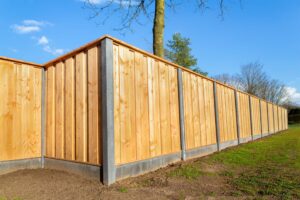 Cedar naturally contains oils that repel moisture and resist decay, making it ideal for New Orleans’ humid subtropical climate. Unlike pressure-treated pine or other wood options, cedar requires fewer chemical treatments to withstand the region’s challenging environmental conditions.
The natural properties of cedar wood provide multiple advantages for Gulf Coast installations. The aromatic oils within cedar act as natural preservatives, protecting against fungal growth and insect infestation without requiring harsh chemical treatments. This characteristic proves particularly valuable in New Orleans, where humidity levels regularly exceed 75% and wood-boring insects thrive year-round.
Cedar’s dimensional stability also addresses a critical concern for local installations. The wood’s cellular structure resists warping and twisting even when exposed to dramatic moisture fluctuations common during summer thunderstorms and winter cold fronts. This stability maintains fence integrity and appearance far longer than alternatives like pine or composite materials that expand and contract more dramatically.
Property owners should note that Western Red Cedar typically outperforms Eastern White Cedar in extreme humidity conditions, though both species deliver excellent results when properly installed and maintained. The tighter grain pattern of Western Red Cedar provides slightly better moisture resistance, while Eastern White Cedar offers a lighter color that some homeowners prefer aesthetically.
Average Cost:
Factors Affecting Cost:
| Item | Cost Range | Notes |
|---|---|---|
| Base installation (per linear foot) | $25 – $45 | Depends on height, cedar grade, site conditions |
| Typical 150-ft backyard project | $3,750 – $6,750 | Average residential project |
| Fence height – 6 ft | $30 – $35 / ft | Standard privacy fence |
| Fence height – 8 ft | $40 – $45 / ft | Taller fences increase cost |
| Premium cedar grade | +30–40% | Clear, knot-free wood |
| Site prep | $500 – $2,000 | Includes grading and clearing |
| Removal of old fence | $3 – $8 / ft | Labor for dismantling the existing fence |
| Soil/terrain adjustments | $2 – $5 / ft | Expansive clay soils require deeper posts |
| Hurricane-rated hardware | $3 – $7 / ft | Reinforcement for Gulf Coast weather |
| Set posts at least 30 inches deep with concrete footings below the frost line to stabilize fences in expansive clay soils. |
| Use fast-setting concrete for high-moisture conditions to ensure optimal stability in New Orleans’ humid environment. |
| Account for soil movement: Clay soils swell when wet and shrink when dry, so posts need proper anchoring to resist shifting or heaving. |
| Post hole diameter: 8–10 inches for standard 4×4 posts, leaving 2–3 inches of concrete around all sides. |
| Concrete collar placement: Extend from below the post bottom to within 2–3 inches of ground level, sloping slightly away from the post to direct water away from the wood. |
| Add gravel for drainage: A 4–6 inch layer of pea gravel at the post bottom prevents water from pooling, protecting against moisture-related decay. |
| Purpose: These techniques increase fence stability and lifespan, essential for New Orleans’ high rainfall and challenging soil conditions. |

Professional installation teams typically complete an average 150-linear-foot residential cedar privacy fence in 2-5 days, depending on site conditions, weather, and crew size. Projects requiring extensive site preparation, permit delays, or custom design elements may extend timelines to 1-2 weeks.
The installation process follows a predictable sequence that contractors adapt based on specific site requirements. Day one typically involves final site preparation, marking post locations, and excavating post holes. Concrete work and post setting occur on day two, with crews allowing 24-48 hours for concrete to cure before proceeding. Rails and picket installation comprise days three and four, with final details, gate installation, and cleanup completing the project on day five.
Weather significantly impacts installation schedules in New Orleans, where afternoon thunderstorms occur frequently during the summer months. Contractors cannot pour concrete footings during heavy rain or when standing water fills post holes, potentially delaying projects by several days during wet periods. Similarly, extreme heat exceeding 95°F can accelerate concrete curing in ways that compromise long-term strength, causing experienced installers to adjust schedules accordingly.
Larger projects or properties with challenging access require extended timelines beyond typical residential installations. Corner lots requiring fencing on multiple property sides, properties with significant elevation changes, or installations incorporating multiple gates and custom features may require 1-2 weeks for completion.
Commercial projects often take 2-4 weeks, depending on total linear footage and complexity of design specifications.
| Maintenance Task | Details / Tips | Frequency |
|---|---|---|
| Cleaning | Use a low-pressure (500–600 PSI) pressure washer with a wood-safe solution to remove mildew, dirt, and debris. | Annually |
| Staining / Sealing | Apply stain or sealer to maintain warm cedar tones and protect against moisture. | Every 2–3 years |
| Weathering Awareness | Expect a silvery-gray patina within 12–18 months without treatment. Not structural damage. | N/A |
| Inspection for Fasteners | Check for loose or missing screws/nails; tighten or replace as needed. | Annually |
| Board / Picket Check | Replace damaged or warped boards promptly to prevent further issues. | Annually or as needed |
| Post Stability | Ensure posts remain plumb and stable, especially near sprinklers, downspouts, or low-lying areas. | Annually |
| Best Conditions for Maintenance | Perform cleaning and staining during dry periods, 50–80°F, with no rain forecast for 48 hours. | As needed |
| Factor | DIY Installation | Professional Installation |
|---|---|---|
| Cost | Saves $12–20 per linear foot on labor | Labor included in total cost; no hidden mistakes |
| Time Required | 4–7 full days for a typical residential project | 2–3 days for the same project |
| Equipment Needed | Must rent or purchase power augers, laser levels, nail guns, etc. | Specialized equipment already provided (augers, laser levels, pneumatic nail guns) |
| Skill & Learning Curve | High; first-time builders must learn proper techniques for post alignment, spacing, and soil challenges | Experienced installers ensure accurate post alignment and proper spacing |
| Safety | Higher risk due to heavy lifting, power tools, concrete work, and repetitive motions | Lower risk; insured professionals handle hazardous tasks safely |
| Liability & Warranty | Homeowner responsible for accidents or mistakes; no guarantee on work | Installers carry liability insurance and typically guarantee work for 1–3 years |
| Soil & Local Conditions | Must manage expansive clay soil, drainage, and underground obstacles independently | Professionals are experienced with New Orleans soil, drainage, and building codes, ensuring long-term durability |
| Overall Quality | Dependent on homeowner’s skill; risk of structural failure or uneven installation | Superior results with proper alignment, stability, and long-lasting fence performance |
While DIY installation can save money, professional installation is the best choice for New Orleans cedar privacy fences. Professionals provide the right tools, experience, and insurance to handle challenging clay soils, safety concerns, and local building requirements, ensuring a durable, properly installed fence that lasts for decades.
Gates, decorative post caps, lattice top panels, and integrated lighting expand cedar privacy fence functionality beyond basic boundary definition and privacy screening. Strategic feature additions increase property value, improve aesthetics, and enhance fence utility for outdoor living spaces.
Gates
Decorative Post Caps
Lattice Top Panels
Integrated Lighting
Investing in a cedar privacy fence in New Orleans is more than just installing wood panels—it’s enhancing your property’s security, curb appeal, and long-term value. By selecting high-quality cedar, preparing your site properly, and using installation techniques suited for the city’s unique soil and climate, you ensure a fence that lasts decades while withstanding humidity, clay soils, and seasonal storms.
Regular maintenance and professional installation further guarantee that your investment continues to perform and impress for years to come.
Ready to upgrade your property with a durable, stunning cedar privacy fence? Contact us today to schedule a consultation and get expert guidance tailored to your New Orleans home.
Properly installed and maintained cedar privacy fences in New Orleans typically last 20-30 years despite the challenging humid subtropical environment. Regular cleaning, staining every 2-3 years, and prompt repairs of damaged sections maximize lifespan by protecting against moisture damage and pest infestation common in Gulf Coast conditions.
Cedar fences built with hurricane-rated reinforcement techniques, including deeper post footings, structural screws, and closer post spacing, can withstand tropical storm conditions and moderate hurricane winds. However, property owners should consider removable lower panels for major hurricanes or plan for potential damage during Category 3 or stronger storms that affect the New Orleans region.
New cedar lumber arrives with natural oils providing moisture and insect resistance without requiring treatment before installation. However, applying a water-repellent preservative or stain shortly after installation enhances protection and maintains appearance longer in New Orleans’ humid climate compared to leaving cedar untreated to weather naturally.
Six-foot cedar privacy fences provide effective screening for most residential properties while remaining within code requirements that don’t require special permits. Eight-foot fences offer additional privacy but require building permits in New Orleans and may face restrictions in historic districts or neighborhoods with specific design guidelines.
Fence posts in New Orleans should be spaced 6-8 feet apart, depending on fence height and wind exposure, with 6-foot spacing recommended for hurricane-prone coastal areas. Closer spacing provides better wind resistance in severe weather while maintaining structural integrity in expansive clay soils that create challenging installation conditions.
Cedar fencing requires 4-8 weeks of weathering after installation before accepting stain or sealer properly, allowing moisture from pressure washing and natural wood moisture to escape. New Orleans’ humidity extends this waiting period slightly compared to drier climates, with optimal staining occurring during fall or spring when temperatures moderate and rainfall decreases.
Cedar privacy fences offer natural beauty, exceptional durability, and inherent resistance to rot...

Choosing the perfect wood fence style can be a daunting task. Indeed, when it's time to bo...